I went back to look at the paper from ten years ago, to remember the optimism and cynicism that burned through town when it was announced that Conuma was coming to town.
Or rather, that Conuma had come to town. It was on September 15, 2016 when we met people like Mark Bartowski and Ken McCoy and heard the grand plans for re-opening the mine, some of which still haven’t come to fruition.
Going through that paper, I thought it would be fun to quote from my editorial.
And discovered it was ten years ago when my mom died, too.
Not to the day, but Joan Stange, formerly Ernst, formerly Misfeldt, passed away on September 19, 2016.
In her memory, and in memory of Conuma’s ten years in town (and yes, I find a way to tie the two together) here’s that earlier editorial.
She was my mother.
It’s the ‘was’ part that finally did it. When my sister called to say that mom had died this morning, I was numb. I couldn’t process it. She was crying, but all I could do was say okay, then go lay on the bed for a while to stare at the wall for a while before I had to head back downstairs to finish working on the paper. Because even when life ceases, it still goes on.
But as I lay there, I began to think about this editorial. About these words.
In my head, I wrote that she was my mother line. And it gutted me.
I’ve been thinking a lot about hope this last week.
Conuma Coal came to town to talk to people about the fact that they were going to re-open Brule mine and were going to try and get Wolverine up and running in the next few months.
And on the faces of the people at the meeting? Hope. Hope that they might be able to get work. Hope they would be able to provide for their families.
On Friday, dancers came from Places of Rescue, and talked about hope. These are kids, orphaned by AIDs, who were in desperate situations and then, when all seemed lost, hope.
I have seen the word scribbled on white boards in passing and heard it used in conversation. When the alarm went off yesterday morning to wake me up, the conversation was about women in Iraq finding hope through education.
Today, a friend posted a video for a song that features the lines: Hold fast the hope that’s in you/Don’t always trust your eyes/Sometimes it takes a long time to see it as a/ blessing in disguise.
On Sunday, I talked about hope at Church. Because hope is something that is often misunderstood. On the surface, hope can be … well, it can be wishy washy. Little more than wishful thinking.
But once you brush away all the fluff that has surrounded it, the misuse and abuse the word has suffered by our casual use of it for the most pedantic and meaningless of reasons, hope remains an iron rod, a candle that burns in the darkness when all other source of illumination has gone. It is what sees us through grief when our own mom pass away. Hope that, no matter how bad it seems right now, how hopeless this moment is, it will get better.
Hope is not blind optimism in the face of overwhelming evidence to the contrary, but a grim determination that, even when everything is crashing down all around you, that there is more.
Hope is what waters the spirit and lets us grow fruitful. Without hope, the fruit we produce from our lives are bitter and bland. Hopelessness leads to cynicism.
But just because there is hope it doesn’t mean that everything is all sunshine and roses. Hope still leaves room for grief. For sorrow. For tears shed for the woman who raised me nearly single-handedly for the better part of a decade, after dad got a new job out of town. After my brother and sister had graduated and left.
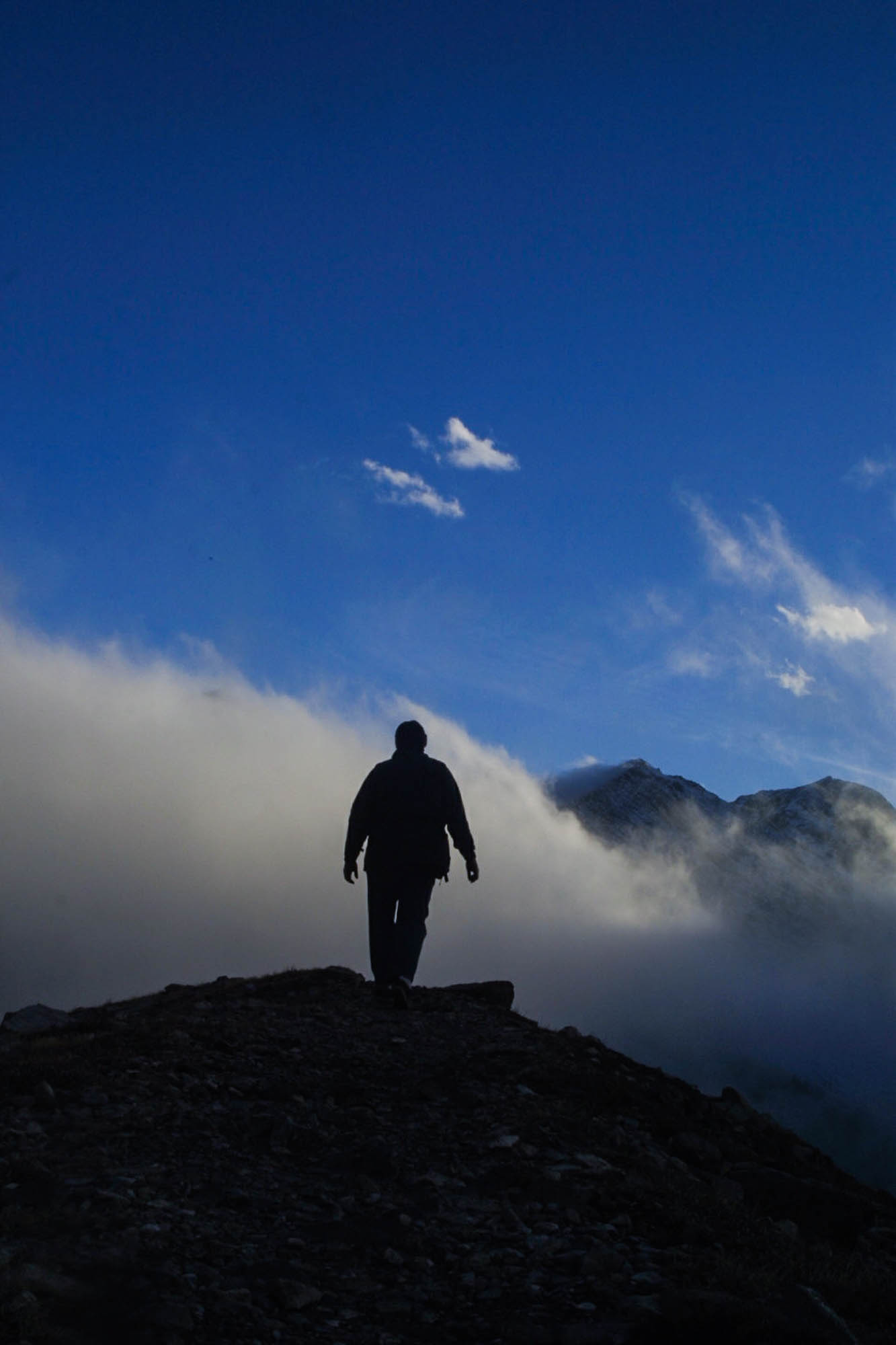
So if I am not at the top of my game for the next week. The next month, I apologize. You now know why. If I seem a little distracted, or listless, or unengaged, I may have my reasons. Because sorrow is unpredictable. Right now, it seems that the clouds of life have blown in around me, and the world seems gray and lifeless.
But to quote George, even behind the clouds, no matter how stormy or bleak the day may seem, the sun is always shining.
That’s it; that’s the whole editorial. And I still have more than a full column left. No wonder writing these editorials seems to be harder than it used to; they’re over 25 percent longer.
I still think about hope, even now, and how it transcends mystical, magical thinking. It’s hope in something … more. One of my favourite lines about hope comes not from some dusty British author, but from a user on what was then Twitter: @Crowsfault: “People speak of hope as if it is this delicate, ephemeral thing made of whispers and spider’s webs. It’s not. Hope has dirt on her face, blood on her knuckles, the grit of the cobblestones in her hair, and just spat out a tooth as she rises for another go.”
There’s hope in the act of returning to school, too. Maybe optimism and innocence have been torn down like what was once TRSS, but that was just a shell, anyway. The heart of the school is the teachers who work there, the administrators who guide the place along, the kids who learn not just about math and science, but about life.
After the year we’ve been having, hope is hard to find, but know that, if you find hope, it can be hard, too. Hard enough to sustain us and get us through.
And hope is rising to her feet and spitting Chiclets as she gets ready for the next school year.
It’s been hard, but it’s not hopeless.
Note: As I was just finishing this up, Cia posted an update about Maya. After six months of silence, Maya said “mom.”
And it broke me, as so much does these days. After days and months that seemed hopeless, hope rises. Maya has said her first word for the second time. And for just a moment, the darkness that has hung over this town, that has hung over me for the last six month is burned away in a flash of pure brilliance. The darkness will return. But hope remains.

Trent is the publisher of Tumbler RidgeLines.