
On December 19, Conuma cleared one more hurdle in its restart of Quintette, when they received the amendment to Mines Act Permit C-156.
“It was a fantastic and gratifying to get that by the end of the year, right before Christmas,” says Brian Sullivan, Chief Executive Officer for Conuma. “We were notified that Minister Braar with Mines and Critical Minerals (MCM) had issued to us the final approved permit amendment.”
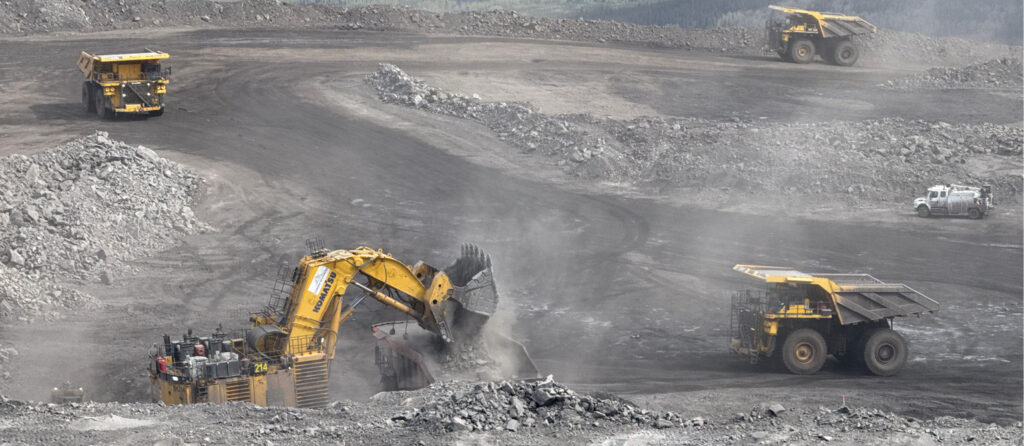
The permit, which Conuma inherited from Teck when they bought Quintette, governs all of the operations on Babcock, including both Big and Little Windy Pits, and Window Pit. “Window Pit is between Babcock and the Core Lodge road area, and is for future development,” says Sullivan.
Conuma has been mining under a temporary Early Works application, first asking the government if they could start to mine in the Little Windy Pit area—which Teck had already begun mining before shutting down operations, and then, when the BC Government Employees’ Union went on strike on the eve of the Mines Act Permit being approved, on an extension to that permit, allowing them to start in the Big Windy Pit area.
“That was a significant step to get that across the line,” says Sullivan. “We no longer have to exist in the status that we’ve had for quite a number of years where we have a series of temporary permits, but needing to go back to MCM and get further interim approval.”
Sullivan says this is a significant step for Conuma. “It’s a red letter day for the company, for Tumbler Ridge, and for Quintette,” he says. “It was a great achievement for the people working inside Conuma. And we had a lot of outside professionals helping us. We had the Indigenous Nations—chiefs, and councils—helping us. We had, of course, the District of Tumbler Ridge helping. Mayor Krakowka was instrumental in opening a line of communication in Victoria, making sure that the government officials and the various ministries down there understood the importance of the permit to Conuma and Conuma’s importance to employment in Northeast BC. He did a lot of work on our behalf as the permit came down to its final stages.”
Sullivan says that dozens, maybe hundreds of people have helped get the permit over the line. “This sets sets up mining for the next 10 years, at least, at Quintette. “For the next…let’s call it two years… we will be primarily in Big Windy. Then we will begin developing the Window Pit.”
In addition to opening up these new areas, Sullivan says they will be making another permit amendment in the next few months to begin highwall mining in the Little Windy area.
“Highwall mining is kind of a hybrid of underground and surface mining,” he says. After it’s no longer economically viable to mine using traditional surface mining methods (where overburden rock is blown up and removed to get to the coal), you can set up a machine that digs into the coal in the side of the mountain, allowing you to remove more coal without any additional surface disturbance.
Sullivan says the company should be filing that amendment later this month.
In addition, he says, the mine is hoping to get an updated effluent permit from the Ministry of Environment and Parks. “There are two main permits that allow us to continue mining,” says Sullivan. “One is the Mines Act Permit, which we’ve gotten. The second piece of that is the effluent permit, which essentially covers how we will manage water both on the site, and as it is discharged off site.”
He says there is an existing effluent permit, but Conuma is making an amendment to that as well. “We expect that we will get the draft of that permit from the Ministry in probably the third week of January with the target that we would get that final piece of the puzzle, by the end of January.”
He says the mine could operate under the current effluent permit, but he says it is not what he would call modern. “There have been a lot of updates to the way both industry and regulators think about water management for all resource projects. We have an obligation as a responsible operator to incorporate those updated concepts and undertakings. So we’ve updated things in close cooperation with the technical experts from the Indigenous Nations. This is something that Lisa [Risvold] really shepherded, with the technical reviewers and the chiefs and councils for the nations. Could we run under the existing effluent permit? Yes, but we wouldn’t, because we’ve made undertakings and agreements with the local First Nations that set forth how we will manage both wildlife and water going forward. We have a moral obligation, to change the way that resource projects handle wildlife and water.”
In addition to Risvold, Sullivan says folks like Sam Payment and Amanda Wamsteeker have been instrumental in getting the mine to this stage. “We have a whole team of people who have really dedicated themselves to the issue of water management at Quintette. It’s super important. I don’t want to underemphasize that. Where the industry has to change, we’re changing, and we’re trying to do as much of that voluntarily in cooperation with the Nations as we can. For example, the working group on the Murray River represents kind of the cooperative efforts between industry, Nations, communities, and industry, and we’re trying to adhere to and steward those sorts of efforts.”
Sullivan says he’s proud of the work everyone has done. “I know that by trying to thank everybody, I’ll leave somebody out who shouldn’t be left out. But it’s been at least 15 years since a permit for coal mining has been issued, and that’s something we’re quite proud of. That seems to fit well with what the government in Victoria is saying about trying to be less dependent upon the United States for trade: fast tracking, and making the permitting process more transparent. Focusing on job creation, paired with responsible resource development. This should be an example of how that’s done.”
With most of the hard work over for Quintette, Sullivan says the plan is to start working on a restart of Peace River Coal (PRC), which he hopes will be a little less fraught. “The major difference now is we don’t have 450 or 500 people needing a place to begin working. I won’t say that the pressure is less, but the reason we had this series of interim steps was because we hoped that we would stop mining at Wolverine one day and everybody showed up the next day for work over at Quintette. But that didn’t happen. We stopped mining Wolverine in May of 2024 and didn’t really get to mining again until we got the interim permit in September of 2024. So we had that kind of five or six month period where we were doing construction and other things that weren’t really mining. We won’t have that at PRC. We’ll be able to go through this permit process without having the Sword of Damocles of 500 people without places to go hanging over our heads. So, that will be different.
“The other part of it is a lot of what we intend to do with PRC will dovetail into the existing assets we have at Quintette. We won’t have a new preparation plant or rail load out. There will be less construction work involved with PRC than there was with Quintette.”
He says work on that should begin in the next few weeks and take the bulk of the year. “We don’t see opening PRC in 2026. That’s likely a 2027 event, though I hesitate to put a date on that because we really haven’t sat down yet with the ministries and agreed on a schedule. But you wouldn’t want to do that in the dead of winter. We were reminded this December that winter actually still does come in Northeast BC. We wouldn’t want to start anything really significant at PRC, before March or April.
The company is also working on getting Brule back up and running. “We are working to get the long-term water treatment system permitted and running this spring. We’ve spent $80 million-ish there building that facility to handle discharge water going into the Blind Creek watershed. We’re in the process of permitting that. Once we get that up and running, there’s still significant reserves left around Brule.”
Indeed, he says, if there is a theme for the next decade for Conuma, it is that their focus will be on areas that already have been disturbed. “Brule is one of those areas where there’s still plenty of mining left to do. We have a permitting process in mind to add resources to that existing operation. We’re probably going to be doing exploration work this year to confirm the existence of what we suspect is there. If it is, that’s another ten to 12 years of mining at Brule.
“We didn’t shut Brule down because there was no coal left. We put Brule on care and maintenance because we mined almost to the last amount of permitted reserve that we had there. We inherited a historic issue of selenium discharge that we needed to remediate, and the water treatment system that we built there will address that.
“When we first inherited the assets, we were kind of mining into a brick wall, if you will. There were hard limits. Now that we have a permit for Quintette and working on restarting PRC and Brule, we will be able to say with confidence here’s where we’re going to be in the next 10 years, and that’s for the community’s benefit, that’s for our owners’ benefit, that’s for our employees’ benefit.”

Trent is the publisher of Tumbler RidgeLines.