On August 1, a new book came out about Tumbler Ridge that wasn’t—and you may want to make sure you’re sitting down for this—wasn’t written by Charles Helm.
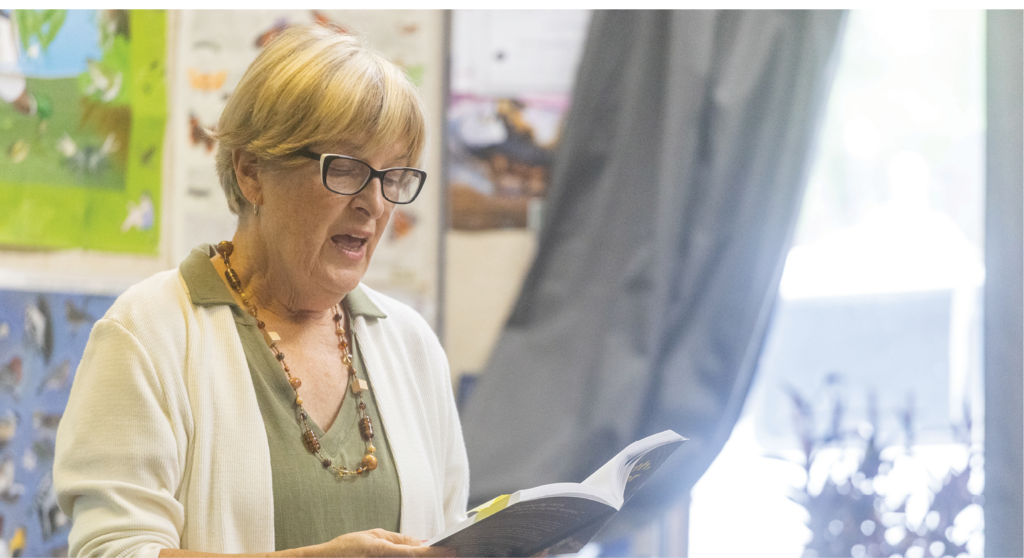
Instead, Go North, Reporter documents the earliest days of Tumbler Ridge through the eyes of then-Vancouver Sun reporter Anne Mullens, who spent a number of weeks living in the area as the town and mines was built around her.
“At the time—from 1980 until early 1983, Tumbler Ridge and the Northeast Coal Project was always in the news,” says Mullens. “It was the biggest thing happening in Canada, and it was controversial. A lot of government money was going to it.”
For decades it was known that there was coal in the mountains around what would one day become Tumbler Ridge, and it was a high grade metallurgic coal, perfect for smelting steel. The Government of BC negotiated a deal with Japan, who needed high grade steel for their automobile production. If BC would spend the money to get it out, Japan would buy it.
“That started a huge process of planning,” says Mullens. “Not only for extracting coal, but building a rail line that would get it to the coast, building a coal port in Prince Rupert, tunneling through mountains, and building the town of Tumbler Ridge to support it.”
There were, says Mullens, as many (or more) naysayers as there were promoters. “People were flocking from Newfoundland. Interest rates were eighteen, nineteen percent. It was an economic crisis at the time and people were really suffering. There was a lot of mine closures across Canada. Tumbler Ridge and the Northeast Coral development was the big thing that was happening. People were flocking to the site and the Sun had sent up some reporters, but the coverage was mostly negative: was this going to be a boondoggle? What was going to happen with it?”
Mullens was asked to go up and cover the building of the town for the Sun. “I had been hired by them about three months earlier. I was what was called a Cub reporter, I was 25 years old. I had a science degree and I really wanted to be on the city side, to report about health and science, but I was in the women’s section, which was called the You section. I was writing soft features about fashion and accessories, but I had no interest in a lot of that. But one day, the city editor walked over to the women’s section, which they never did. There was a real division. There was a line of potted plants between us. He sat down and he said, ‘Anne, we think you’re the perfect writer. We got this great assignment for you. We want to send you north.’
“I didn’t know he’d asked five or ten other reporters, who said no. It meant leaving Vancouver in the summer, and heading up to Tumbler Ridge. We didn’t know where anybody would stay at that time because there was no real accommodation. But I just thought: ‘this is the assignment of a lifetime.’ So I said ‘yes, of course I’ll do it.’ I had no boyfriend, I had no mortgage, I had nothing tying me down, and I just it sounded fantastic.”
At the time, the Sun employed more than 125 reporters. The paper was 80 to a 100 pages a day and bigger on weekends. “They wanted someone to be up in Tumbler Ridge. It took about three weeks to make all the arrangements. I found a camper, a truck camper that I could stay in. We found George and Janet Hartford—who were the teachers at the time. I could park in their trailer driveway and hook up to their power and water, use their bathroom, also use their telephone.
“You’ve got to remember at the time, there was no cell phones, there was no internet. It was really remote. And the roads were also awful. There’s a picture in the book, which shows what the roads were like. It was basically a construction site.”
But for Mullens, it wasn’t a hardship, it was an adventure. “I had a gas. I just loved it. Of course there were real difficulties, you know. But it was an incredible opportunity to meet and talk to people. How I would get stories would be just walking around uh the construction sites. I was parked right beside the medical trailer and the dental trailer and they would ask me: ‘when do you work? You just walk around all the time.’ But that was my work. I had to talk to people, so I would hang out by the SuperValu trailer and the liquor store trailer and there was a little video outlet where I would hang out, too. That’s how I got a lot of the stories until Quintette finally let me go up and spend some time at the various camps. But that took a while. They had to see that I was reporting fairly.”
Over the course of about ten weeks, she wrote stories that appeared regularly in the Sun. She returned in 1990 to write more stories about the town as the mines’ (and therefore the town’s) uncertain future, bringing the total number of stories to 37. Add in interstitial comments from modern-day Mullens, plus a number of photos from those early days, and you have enough to fill a 253-page book.
I ask her who the most fascinating character she met in those early days was. She says everyone was. “People that would come to Tumbler Ridge were brave and and outgoing. If you wanted creature comforts, you didn’t come to Tumbler Ridge. To a person, they were adventuresome and optimistic and wanting to make a difference. That was really refreshing. There was a real sense of people pulling together. There were people that didn’t like that kind of life and who didn’t stay long, because the mosquitoes were bad and the roads were muddy and you couldn’t get…there were so many things you couldn’t get, actually.
“There were a number of young couples that would come up and there was a real a baby boom. There was a lot of pregnant women, because their partners were the carpenters and framers. The men were up at the mine and the women were down in the town. There weren’t that many women around, and you couldn’t get diapers very easily.
But there had to be at least one person who stood out amongst the rest. “John Terry,” she says. “There’s pictures of him in your community centre. He had lived there for probably forty or fifty years beforehand, and so the Northeast Coal development really upended his life. He had been living solo in the valley, hunting and trapping and living on a homestead. He was fascinating.”
She says that she knew it was going to be an adventure before she even got to town. “I’ll never forget driving in because I was driving this big camper van in from Dawson Creek, and it was just clouds of dust along the gravel road. And coming out were all of these really big four wheel drive trucks with buggy whips on them. All you could see was the buggy whips sticking out of the dust. I was coming in on a Friday and all these trucks were coming out. When I came in, I couldn’t even find the town. There was a guy driving a grader, trying to move the big boulders off the road. I said: ‘Where’s Tumbler Ridge?’ And he says, ‘you’re here.’ The whole town was being built. It was all under construction. I don’t think anybody had moved into a house at that point. There was a second place—where the saddle club and horse trails are—called Dog Patch and it was outside of the town center. It was where all of the temporary services like the Royal Bank were. The bank was in a trailer and there was a little video store that was in a trailer There was a pizza place that a fellow had started up—also in a trailer—and the post office was six feet by three feet, a tiny part of a trailer. And that was Dog Patch. It was all mud. It looked like the Wild West, because there had to be boardwalks over top of the mud or you would lose a shoe or boot in the mud. Dog Patch disappeared as the town grew.
“I was told if I could find the flag of the elementary school— which was near where it is now—that I would find George and Janet Hartford’s place, and I could park there. But I was completely disoriented the first day I came in, trying to figure out what was where. Over the course of the time I was there—I spent about four weeks in one shot, then I got a couple of weeks off and then I came back up again. But things were moving so fast. Houses were were being built, the community center was being built. And town hall was being built. They opened town hall in the August when I came back. That was one of the first things to open.”
While the town was being build, many people lived in camps, the biggest of which was the Thousand Man Camp. A smaller camp was called the Five Hundred Man Camp. “Bullmoose had another camp and then along the rail line there were these remote camps like the Sukunka Camp and they were all just ATCO trailers. The Thousand Man Camp was a city of trailers. It had a mess hall that fed up to twelve hundred people a day. It was phenomenal to see the scale of things going on without many services to support them.”
One of her favourite moments—which she shared at the book launch on Saturday—was being there for the hole through of the Wolverine Tunnel. “There were two very large tunnels on the spur line that was going from Tumbler Ridge to Prince George. The Wolverine tunnel was six kilometers long, and the Table Tunnel was nine kilometers. At the time, they were some of the longest tunnels in the world. We got word that they were close to the hole through of the Wolverine Tunnel. A photographer for the Sun had come up for a week to shoot some pictures, and they said we could come to the hole through. They had a helicopter for us. We were helicoptered up to the Sukunka camp and stayed in the trailers overnight.
“At six o’clock in the morning we heard the last explosion going off and we were all in rain slickers and we rode this little train called a Loci—there were probably about twenty five of us—deep into the mountain to shake hands with the people on the other side. And that’s the picture on the cover of the book, just as we’re going into the tunnel.
“I’ll never forget that. Just the smell, and the feeling of going into that tunnel, I’ve never done anything like it. I can still feel the cold, damp air and the smell of hydrogen sulfide. And there was also—I describe this in the story, caverns of water that had been there for a million years. And as they would drill, they would hit one of these water would gush out at ten times the force of a fire hose. That was the major problem they had to struggle with.”
It was 35 years before Mullens returned to Tumbler Ridge again, this time to speak about type two diabetes as part of a project she’s been working on with Charles Helm. After not returning for three and half decades, she’s still impressed by the people who live here. “I love the resilience of Tumbler Ridge. I really look forward to meeting people.”
The people who have read the book already (including yours truly) have been impressed with the way it connects. “I gave it to my daughters to read,” she says. “If someone is going to tell you the truth, it’s your daughters. And they found it an enjoyable and enlightening read.
“I hope that people can—43 years later—still get some enjoyment and a sense of place and of the spirit of Tumbler Ridge that was so evident to me when I was here.”
Trent is the publisher of Tumbler RidgeLines.